

Elite Precision at the Ardennes: PESC Season Kicks Off at Spa
The Porsche Esports Supercup (PESC) World Championship represents the absolute peak of sim racing competition. This past weekend, the 2026 season opener at the Circuit de Spa-Francorchamps reminded us why this series is the ultimate litmus test for both driver skill and hardware reliability. With 32 of the world’s most elite drivers on the grid, the margin for error was non-existent, and the results were decided by mere centimeters and milliseconds.
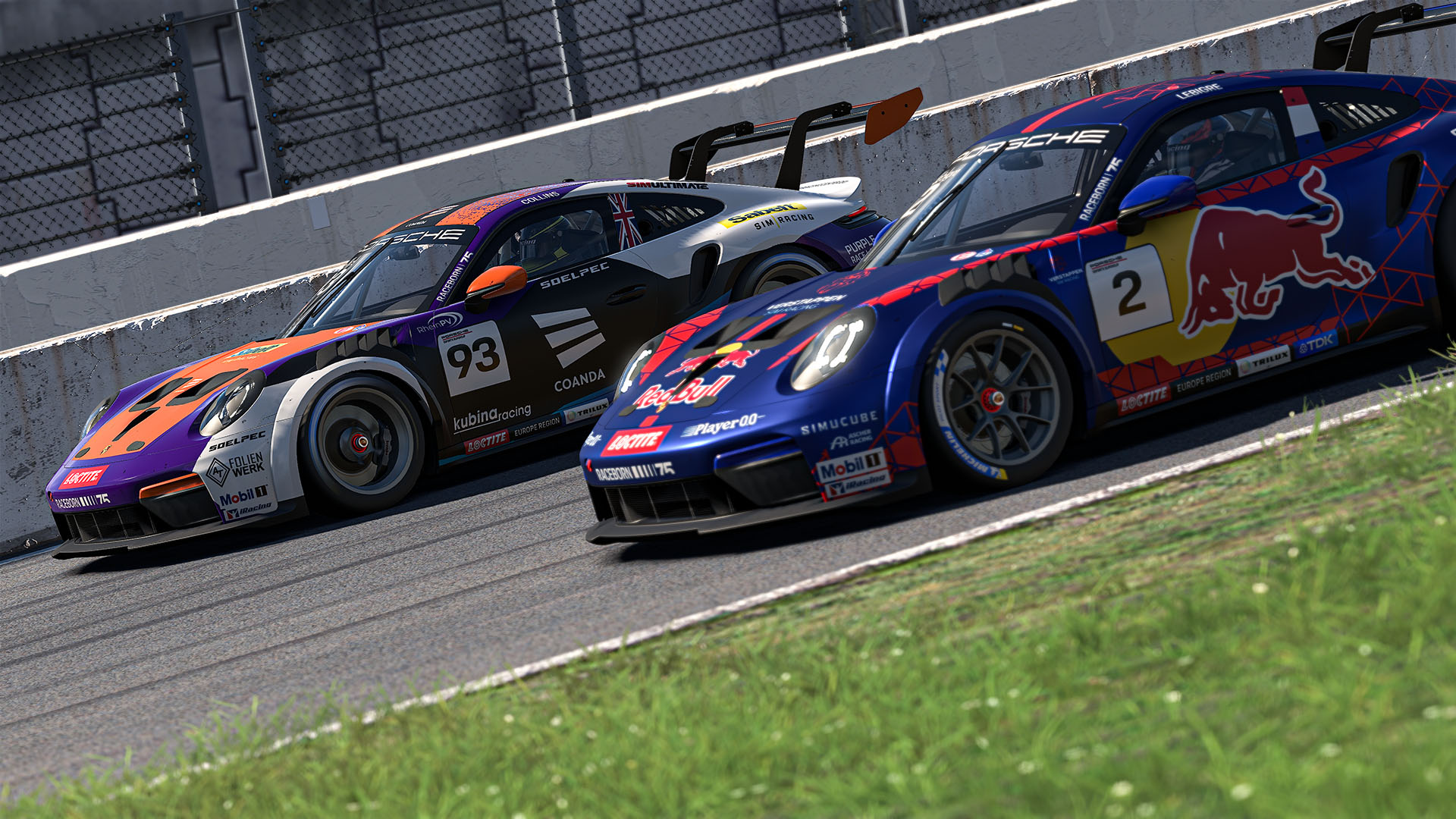
Lebigre Asserts Dominance in the Sprint
The day began with a masterclass in qualifying from Florian Lebigre (Verstappen Sim Racing). In a field separated by literal thousandths of a second, Lebigre secured the pole position with a 2:14.762—just 0.008s faster than two-time champion Sebastian Job. This level of qualifying performance demands more than just talent; it requires a cockpit with zero flex and a pedal set capable of repeatable, high-pressure trail braking into technical sectors like La Source.
Lebigre translated that qualifying pace into a dominant Sprint Race victory, leading all seven laps. While he controlled the front, the battle for the "inverted pole" (8th place) was where the tactical depth of PESC shone. Gustavo Ariel successfully navigated the chaos of the Kemmel Straight to secure 8th, granting him the P1 start for the Main Race.
Final Lap Drama: The Cost of a Single Curb
The 30-minute Main Race was a tactical chess match. Gustavo Ariel held the lead for 13 of the 14 laps, defending brilliantly against a charging pack led by Mitchell deJong and Charlie Collins of Coanda Esports. For the majority of the race, Ariel looked untouchable, demonstrating the kind of defensive consistency that is only possible when a driver is completely "at one" with their force feedback delivery.
However, Spa is a circuit that punishes even the slightest over-rotation. On the final lap, as the field climbed through the high-compression zone of Eau Rouge and onto the Raidillon crest, Ariel caught a fraction too much curb. The resulting oscillation unsettled the Porsche 911 GT3 Cup car just enough to allow Charlie Collins to pull alongside on the Kemmel Straight. After a brief moment of contact and a frantic attempt to reclaim the line, Ariel was forced into a slow-down penalty at Les Combes, handing the victory to Collins.
Performance Analysis: Why Hardware Matters at Spa
This race was a perfect case study in the importance of high-fidelity sim racing gear. Ariel’s mistake at Raidillon highlights the necessity of high-end Direct Drive bases from brands like Moza or Fanatec. When the car hits a curb at 240 km/h, the speed of the motor's response determines whether a driver catches the slide or loses the lead.
Furthermore, the endurance required for a 30-minute sprint in the Porsche Cup car—a vehicle known for its lack of electronic aids—places massive demand on the rig. To maintain the braking consistency seen by drivers like Collins and deJong, a rigid aluminum profile chassis, such as an Advanced SimRacing (ASR) frame, is essential. Any flex in the pedal plate during those high-pressure final laps into the Bus Stop chicane can result in a lock-up that ruins a podium finish.
Grid Logic Verdict
The season opener at Spa proved that the 2026 PESC title will be won on the margins. Charlie Collins showed incredible patience, but the real story was the technical precision required to survive the Ardennes. If you are looking to shave tenths off your own Spa lap times, the lesson here is clear: consistency is born from stability. If your current setup has even a hint of flex or "dead zones" in your force feedback, you are leaving time on the table at Raidillon. We are looking forward to seeing how these drivers handle the high-speed transitions of Silverstone next week.
View the original announcement on iRacing's website here: https://www.iracing.com/florian-lebigre-charlie-collins-claim-wins-at-spa-francorchamps-porsche-esports-supercup-world-championship/


