

Sim-to-Reality: Why Your Rig is the New Driver Development Program
The boundary between virtual simulation and real-world motorsport hasn't just thinned; it has effectively evaporated. Twenty years ago, the idea of a rookie winning at a technical track like Pocono using "video game" practice was a novelty. Today, as we look at the trajectory of the eNASCAR Coca-Cola iRacing Series and the success of drivers like William Byron, Rajah Caruth, and Vicente Salas, it is clear that the sim rig has become the most cost-effective and data-dense driver development tool in history.
The Hamlin Precedent and the Hardware Evolution
In 2006, Denny Hamlin shocked the NASCAR world by winning at Pocono without ever having turned a lap there in a physical car. His secret was NASCAR Racing 2003 Season, the precursor to modern iRacing. Fast forward to the present, and the "Sim-to-Reality" pipeline is the industry standard. Drivers are no longer just "playing a game"; they are developing muscle memory, learning pit entry geometries, and practicing high-pressure restarts.
For this transition to work, however, the fidelity of the hardware must match the sophistication of the software. In the early 2000s, gear-driven wheels were sufficient for basic track mapping. In the current era of the eNASCAR Pro Invitational and the Coca-Cola iRacing Series, performance-oriented hardware is non-negotiable. To extract the same data that a Cup Series engineer uses, a driver needs the high-frequency detail provided by Direct Drive systems like the Moza R21 or the Fanatec ClubSport DD+.
Closing the Gap: Rig Rigidity and Skill Transfer
The success of sim-first drivers like Rajah Caruth—who transitioned from the eNASCAR IGNITE Series to winning in the NASCAR Craftsman Truck Series—highlights the importance of "Race Craft Transfer." When a driver is under the heavy braking loads required at a track like Martinsville or Gateway, any flex in the simulator’s chassis results in lost data. This is where the synergy between hardware and performance becomes critical.
At Grid Logic, we emphasize that a rigid platform, such as an Advanced SimRacing (ASR) chassis, is the foundation of this skill transfer. Without a zero-flex cockpit, the nuance of a load-cell brake pedal is wasted. If you are practicing for a real-world Late Model or Truck Series debut, your inputs in the sim must be identical to the physical car. High-end sim racing hardware allows a driver to bypass the multi-million dollar "karting-to-cars" financial barrier, providing a professional-grade training environment in their own home.
Beyond the Driver’s Seat: The Engineering Ecosystem
The Sim-to-Reality movement isn't limited to the person holding the steering wheel. We are seeing a massive influx of sim racing talent into professional engineering and team management roles. Keegan Leahy, the 2021 eNASCAR champion, successfully leveraged his deep understanding of iRacing’s physics into a full-time engineering role at 23XI Racing. Similarly, Steven Wilson’s role as a simulation driver for Spire Motorsports demonstrates that "lapping" is now a legitimate form of R&D for real-world setups.
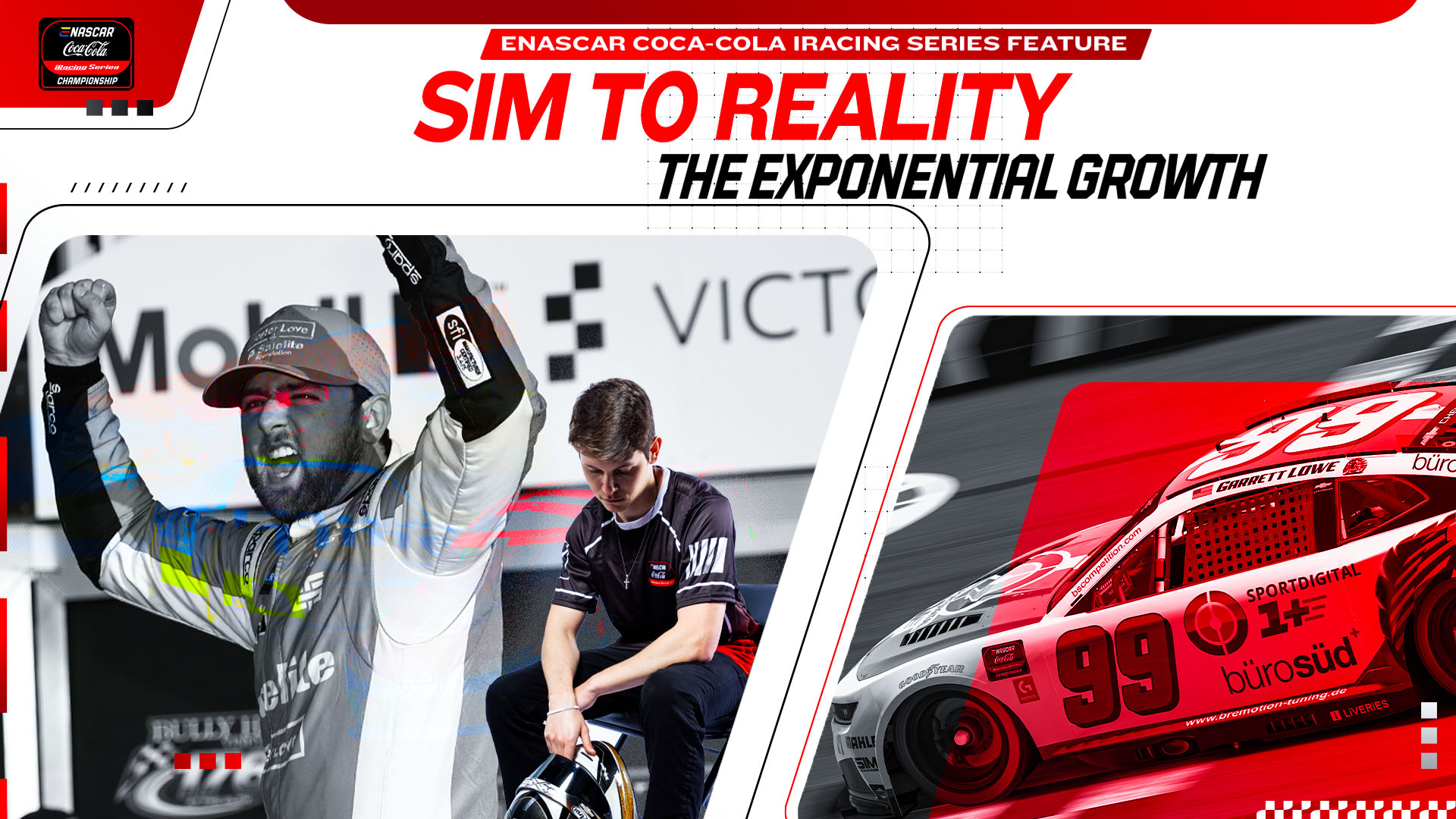
This ecosystem proves that the sim rig is a laboratory. Whether you are testing tire deg through a Moza wheelbase or analyzing telemetry via the Cosworth Pi Toolbox, the data you generate in the virtual world has direct, measurable consequences on Sunday afternoons.
The Grid Logic Verdict
The era of viewing sim racing as a hobby is over. If you are serious about performance—whether you’re an aspiring pro or a dedicated enthusiast—your equipment must be viewed as a technical investment. To achieve true Sim-to-Reality parity, we recommend focusing on three pillars: a high-torque Direct Drive base (Moza or Fanatec) for tactile feedback, a high-fidelity load-cell pedal set for muscle memory, and a rock-solid ASR aluminum profile rig to ensure consistency. In 2026 and beyond, the fastest way to the winner's circle in the real world is through the laps you put in on the sim.
View the original announcement on iRacing's website here: https://www.iracing.com/sim-to-reality-how-enascar-has-fueled-growth-in-sport/


